
The way you choose an office for rent directly impacts employee productivity, as a positive work environment fosters creativity and helps attract top talent. Selecting an office that is fully equipped with comprehensive amenities and surrounded by conveniences will help reduce operating costs and minimize obstacles to future business growth. Therefore, choosing the right office requires careful analysis and a thorough evaluation of all relevant factors to ensure the best possible and most cost-effective results.
Understand Your Team's Working Style
Before addressing how to choose an office for rent, start by clearly analyzing your organization's working style. Today's workplace models are diverse, whether it be hybrid arrangements that blend in-office and remote work, remote-first setups that rely primarily on digital communication, or collaborative models that demand dedicated space for brainstorming. Assessing an appropriate team size, the nature of the work, and daily workflows will help you determine the precise amount and type of functional space ensuring you avoid wasting budget on areas that add no value.
Key Factors to Consider When Choosing an Office for Rent
Choosing the right office requires a balanced assessment of multiple factors. Price or aesthetics alone should never drive the decision. To find a workspace that truly supports your business potential, consider the following:
1. Location and Accessibility
A key factor in choosing an office is the location of the workplace. You should prioritize buildings that facilitate commuting, such as those within walking distance of public transport like the BTS Skytrain or MRT or those near expressway entry and exit points for those using private vehicles. A convenient commute reduces travel time and costs for employees, helping to alleviate accumulated stress while increasing time for rest and high-quality work.
2. Space Size and Flexibility
When calculating your office space requirements, you must think ahead. A good office should accommodate your current headcount and be able to support team expansion over the next one to three years. Buildings that offer flexibility in adjustments will make it easier to allocate space conveniently, providing both collaborative zones and the necessary private areas for tasks that require deep focus.
3. Office Type
There are two main categories of office space: furnished offices that come fully fitted out with furniture, which helps save time on move-in and reduces the initial capital outlay making them suitable for startups and SMEs; and bare-shell offices, which are empty spaces that may offer better long-term value since they can be customized to reflect your Brand Identity exactly as you envision it.
4. Amenities and Technology
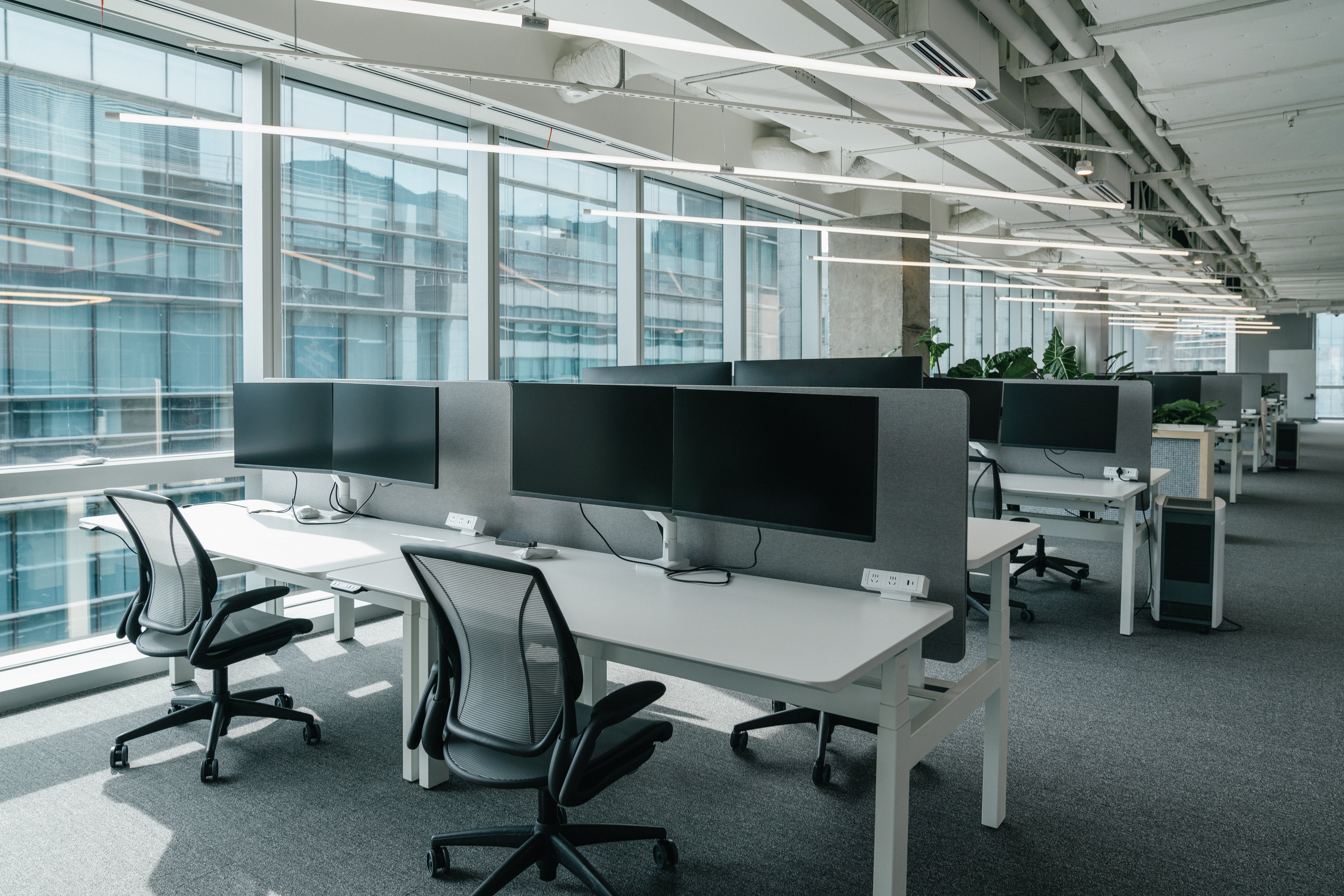
In an era that prioritizes digital connectivity, the building must support high-speed internet, offer meeting rooms equipped with video conferencing systems, and provide breakout areas. Beyond that, adequate parking, security, and smart office systems, such as IoT-enabled lighting and climate control, will add convenience while reducing energy costs.
5. Budget and Hidden Costs
Budget planning helps control rental costs and prevents them from spiraling out of control. Beyond the monthly rent, it is necessary to factor in common area maintenance (CAM) fees, water and electricity charges, parking fees, and equipment maintenance costs to compare them against what is received. The cheapest office is not always the answer if it means trading off for constant repair costs or a location that drives employee turnover which represent much higher hidden costs.
6. Employee Wellbeing and Work-Life Balance
The physical environment has a direct effect on mental health. Choosing an office that genuinely cares for employees means organizing the space to support work in every aspect, including the allocation of green spaces for relaxation and dedicated break areas that are clearly separated from the working zone. This kind of helps create an environment that stimulates creativity, reduces stress, and promotes a healthy work-life balance making employees happy to come to work, reducing turnover, and building a strong company culture.
7. Office Security
Safety for life and property is a fundamental foundation of a good office. A good office building should feature 24-hour security, CCTV coverage across all common areas, modern key-card access control, and fire protection systems that meet standards and are regularly inspected. This allows employees to work without worry and builds trust with partners and clients who visit the company.
Tips for Choosing an Office That Fits the Modern Workplace
When selecting an office that suits today's modern way of working, consider the following:

Create a Checklist to Guide Your Decision
A structured checklist helps filter out unsuitable options and ensures the chosen office meets your needs. Key items to consider include:
- Space size and maximum employee capacity
- Total budget ceiling, including CAM fees
- Location and distance from the nearest BTS or MRT station
- Essential amenities for your organization (e.g., meeting rooms, stable server infrastructure)
- Target move-in date and fit-out timeline
Visit and Trial the Space Before Signing (Walk-Through / Trial)
An effective way to choose the right office is to visit the premises in person during business hours. This allows you to experience the working atmosphere first-hand observe lift congestion at peak times, assess the cleanliness and condition of common areas, and get a feel for the neighbourhood. Some serviced office providers offer a day pass so you can trial the space with your team. This direct experience helps you determine how to best satisfy your team and prevents small issues that may only surface after the lease is signed.
Consider a Turnkey Office with Full Services
For businesses that value agility, a serviced office which includes housekeeping, reception, and mail-handling services is an attractive option. It reduces the burden of building management for HR or admin teams, freeing the team to focus on their core business. This model also helps keep monthly expenses stable and predictable, which is ideal for modern business that emphasizes speed. JLL Thailand offers a wide selection of high-quality offices to suit every working style, helping you manage your monthly budget with precision and drive your business forward with confidence.
Plan for Growth and Team Adaptability
The business landscape changes rapidly, and your workspace should never become a constraint on growth. When evaluating a rental office, you must consider the building's capacity for future expansion such as available space on the same floor or adjacent floors that you could take over later, or negotiate lease terms that allow you to relocate to a larger unit within the same building as your business scales. Good planning will help minimize the cost and hassle of a full office move when the company grows.
Successfully choosing an office for rent is not solely about luxury it is about suitability and flexibility that meets real-world usage. Location, amenities, and an environment that promotes work-life balance are the key to driving an organization forward. Look for an office that office that is ready to adapt to today's new ways of working, and you will build a strong foundation ready to support future success.
If you are searching for a workspace that truly meets your needs, JLL Thailand is ready to be your partner. As a leading real estate consultancy, We have the expertise in analyzing and matching the most suitable office for every organization from startups to multinationals. This ensures that your new office is not just a place to work, but a space that unlocks your team's full potential and drives sustainable business success. For more information Contact us at Tel. 02 624 6471.
Reference:
https://www.anajakdevelopment.com/blog/7-เทคนิค-เลือกเช่าออฟฟิศ/
https://tipcotower.com/วิธีเลือกออฟฟิศให้เช่า/
https://www.encoterminal.com/find-office-for-rent/


