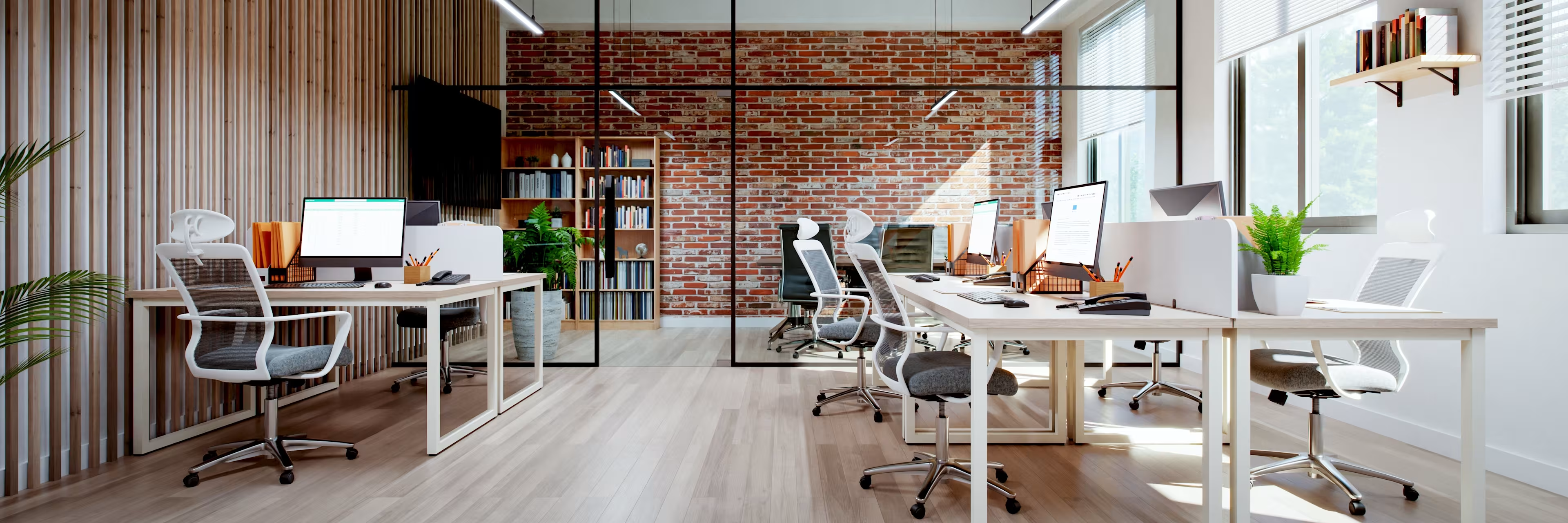
Startups and mid-sized enterprises are experiencing rapid growth. During the initial stages, these businesses often face significant operational expenses, making the selection of appropriately sized small office space a strategic cost-saving measure. However, designing small offices requires maximizing spatial efficiency while maintaining employee quality of life. Effective design transcends aesthetics it encompasses functionality that enhances productivity and delivers long-term value on investment. So how do you design a small office to be both functional and appealing? Here are 9 proven techniques.
9 Essential Techniques to Transform Your Small Office into a Spacious, Functional Workspace
Designing a small office with limited space to feel open and functional helps create visual depth, making the area appear larger while ensuring employees feel relaxed rather than cramped. These 9 techniques will make designing within spatial constraints much easier.
1. Create Open-Plan Layouts
In offices with limited space, solid walls make rooms feel even smaller and more stifling. Converting solid partitions into open-plan layouts, or incorporating transparent dividers in select areas, expands the perceived office space by creating visual connectivity. This optical illusion makes the room feel larger than its actual size. Additionally, open-plan layouts foster collaboration and communication between teams, making it easier to interact and exchange ideas.
2. Select Streamlined, Appropriately Sized Furniture
With limited space, choosing furniture with clean, minimalist designs and proportions suited to the room dimensions makes spaces feel more open and comfortable. Opt for desks and shelving units that don't waste floor area and are easily stored. Selecting lightweight materials helps reduce the feeling of heaviness and clutter, while enabling rapid workspace adaptation to meet daily operational requirements.
3. Maximize Space Efficiency with Organized Storage
Designing small office spaces for maximum utility requires prioritizing vertical storage solutions to leverage wall space, alongside selecting multifunctional furniture that reduces the number of pieces while increasing usable area. Additionally, maintaining organization is a critical complementary factor—a cluttered and disorganized office will immediately appear cramped and confined.
4. Choose Light Color Palettes
Changing room colors is a simple technique that instantly makes small offices appear more spacious, as color significantly influences spatial perception. We recommend painting walls in light tones such as white, cream, or beige, which make rooms look clean while reflecting light better than dark colors, creating noticeably brighter and more spacious environments. Furthermore, light color palettes create calm, visually comfortable atmospheres that help employees feel relaxed and reduce workplace stress.
5. Maximize Natural Lighting
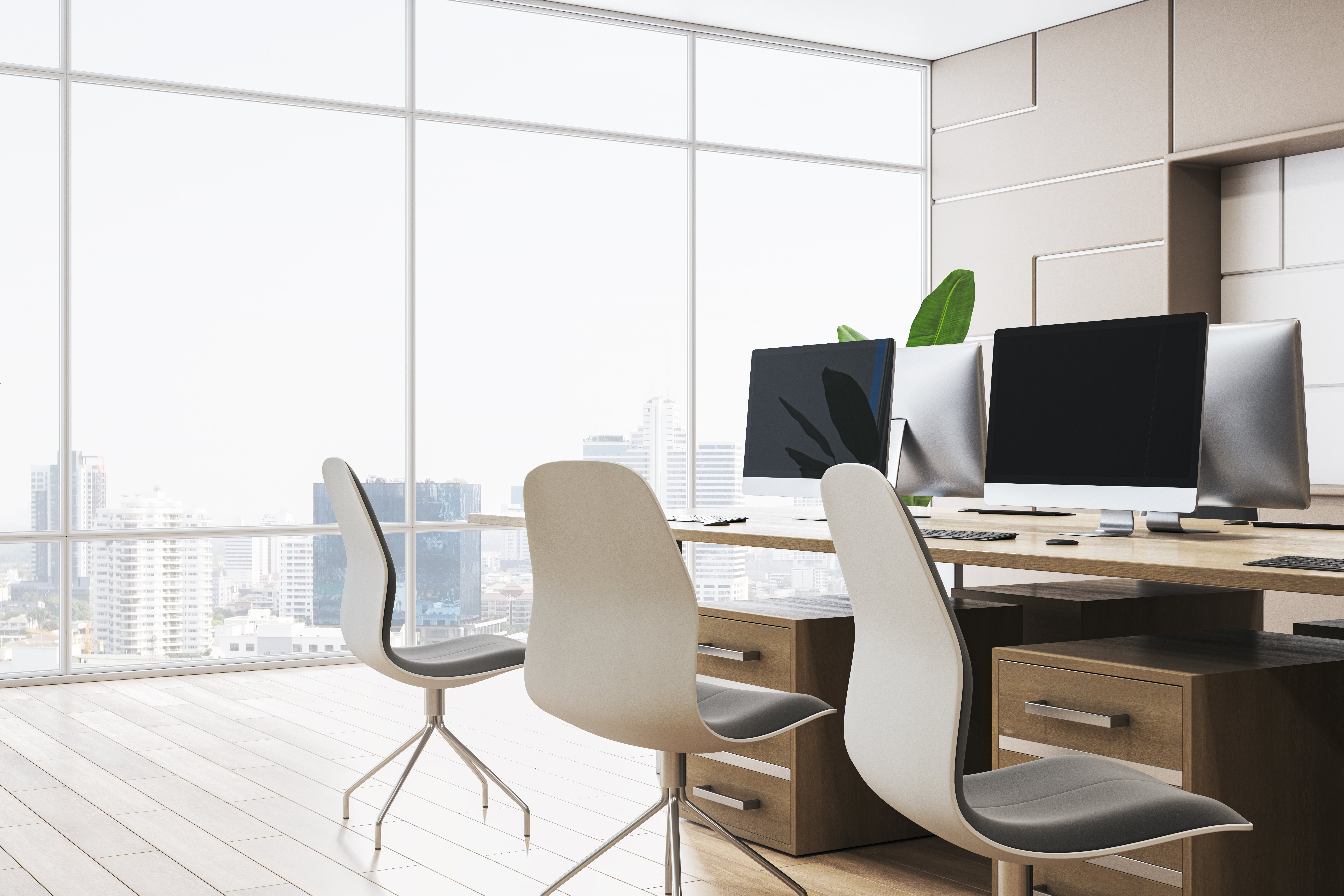
Rooms with appropriate natural light feel more vibrant and appear more airy than dark, enclosed spaces. Installing large windows or skylights increases natural light penetration. Importantly, natural light benefits employee health by reducing eye strain, increasing alertness, stimulating cognitive function, and reducing midday electricity costs. For offices with window limitations, install adjustable blinds or thin louvers to control light intensity and prevent excessive glare, supplemented with lighting systems that simulate natural light as closely as possible.
6. Use Mirrors to Add Dimension
Using mirrors is another classic yet highly effective technique for making small offices appear larger. Installing mirrors on one wall creates reflections that produce the optical illusion of doubling the room size. Importantly, incorporating mirrors into office design adds a sense of luxury and modernity. However, select high-safety tempered glass and ensure designs maintain workplace privacy.
7. Implement Technology-Enabled Space Management (Smart Office)
Introducing Smart Office technology to small office design enhances the efficiency of spatial management. Desk booking systems eliminate the need for assigned desks for every employee, enabling shared workspace usage ideal for organizations implementing Hybrid Working models. This reduces the number of desks, freeing up additional usable space
Additionally energy costs. Implementing Smart Office technology offers versatile solutions that support agile adaptation., occupancy sensor systems enable space utilization analysis and layout optimization based on actual usage patterns. Lighting and temperature control systems create comfortable office environments suited to the number of occupants while reducing
8. Consider Safety and Hygiene Standards
Office design encompasses more than creating open, airy spaces—safety and hygiene are essential design considerations. This includes clearly marked fire escape routes, readily accessible fire prevention equipment, and furniture placement that doesn't obstruct walkways for safety purposes. Critically, efficient ventilation systems must be installed to ensure fresh air quality, reduce pathogen accumulation, and eliminate unpleasant odors, creating safe work environments for all employees.
Design with Future Business Growth in Mind
Small office design requires not only optimizing current space utilization but also planning for the future. As businesses grow, having a plan for expansion will make it easier to scale. Therefore, create flexible floor plans that accommodate additional equipment installation when new employees join. Investing in a design that can support expansion from the start saves both time and expenses long-term.
Modern-Style Small Office Decoration Ideas
Modern styling emphasizes simplicity with a focus on functional design, making it ideal for small offices that aim to appear spacious and contemporary. These curated office decoration ideas elevate office aesthetics while enhancing workplace appeal.
1. Utilize Co-working Tables
Selecting co-working tables that accommodate multiple users maximizes small office space utilization to its full potential. This approach saves more space than combining multiple individual desks. Beyond creating organized floor plans, this approach stimulates team communication and facilitates effective collaboration. Choosing tables with clean designs in white or light wood tones further enhances overall spatial openness without creating a feeling of crowding.
2. Build In Document and Storage Cabinets
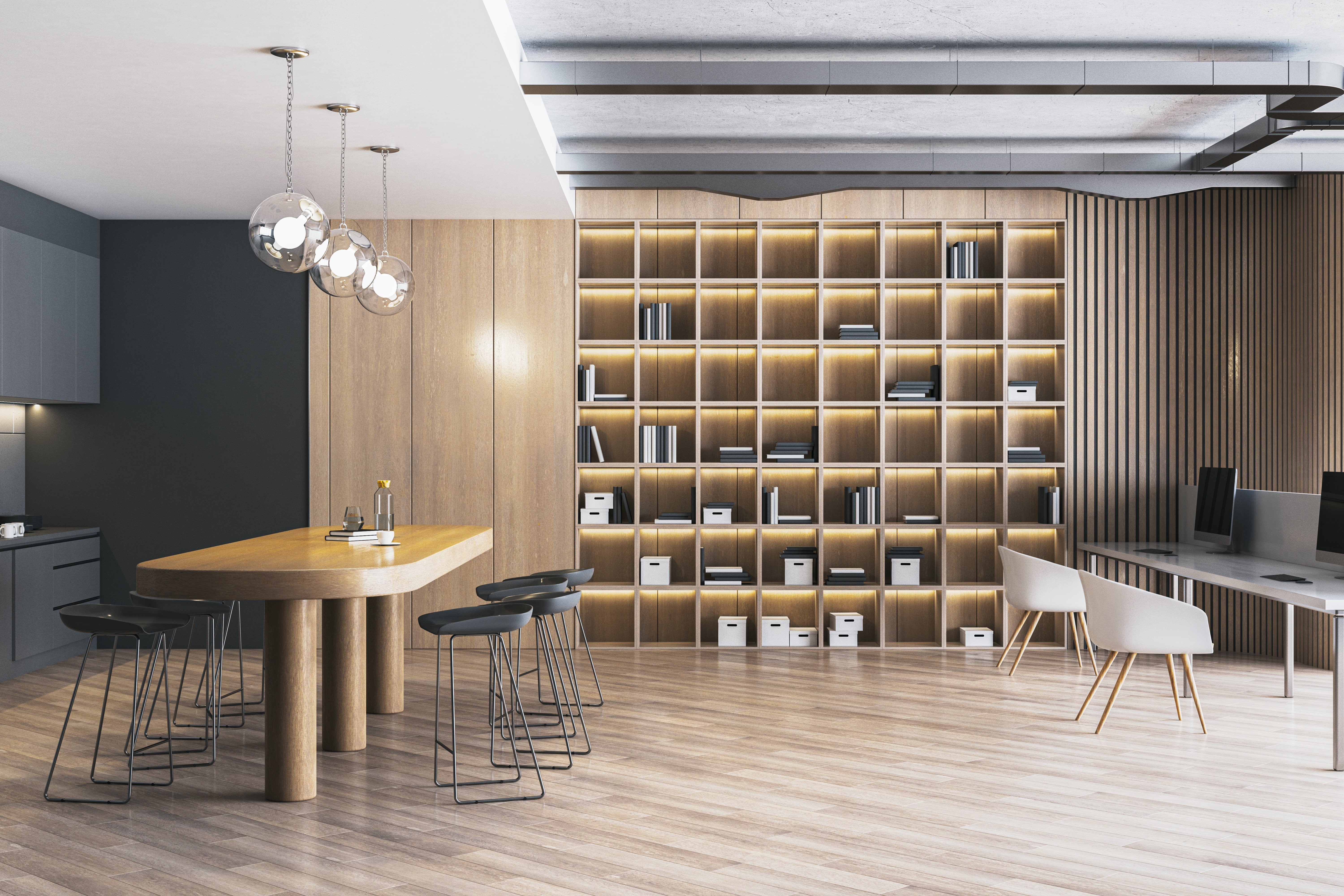
Organizing small offices requires maintaining order in every area. Custom built-in document cabinets and storage shelves maximize vertical wall space utilization while saving floor area. Emphasize designs that are flush with the walls without protruding handles, or use colors matching wall tones to create a sense of visual continuity that makes rooms feel more spacious while also making cleaning easier.
3. Decorate with Modern Patterns and Accessories
An overly simple small office design can lack dimension and appear flat. Modern-style decoration adds visual interest to the room, but select appropriately sized decorative items in limited quantities to avoid clutter. Using decorative elements in the brand’s color palette is a way to build recognition and impress clients while reinforcing a professional, contemporary image.
4. Create Employee Relaxation Areas
Working in limited spaces for long periods can induce stress. Establishing small relaxation zones for employees—whether by placing small sofas, cushioned chairs, or bean bags—creates an atmosphere that provides relief from work. These spaces allow employees to step away from their desks, change postures, rest their eyes, or engage in informal conversations. Having break spaces allows the brain to reset and return to work with renewed efficiency.
5. Add Greenery
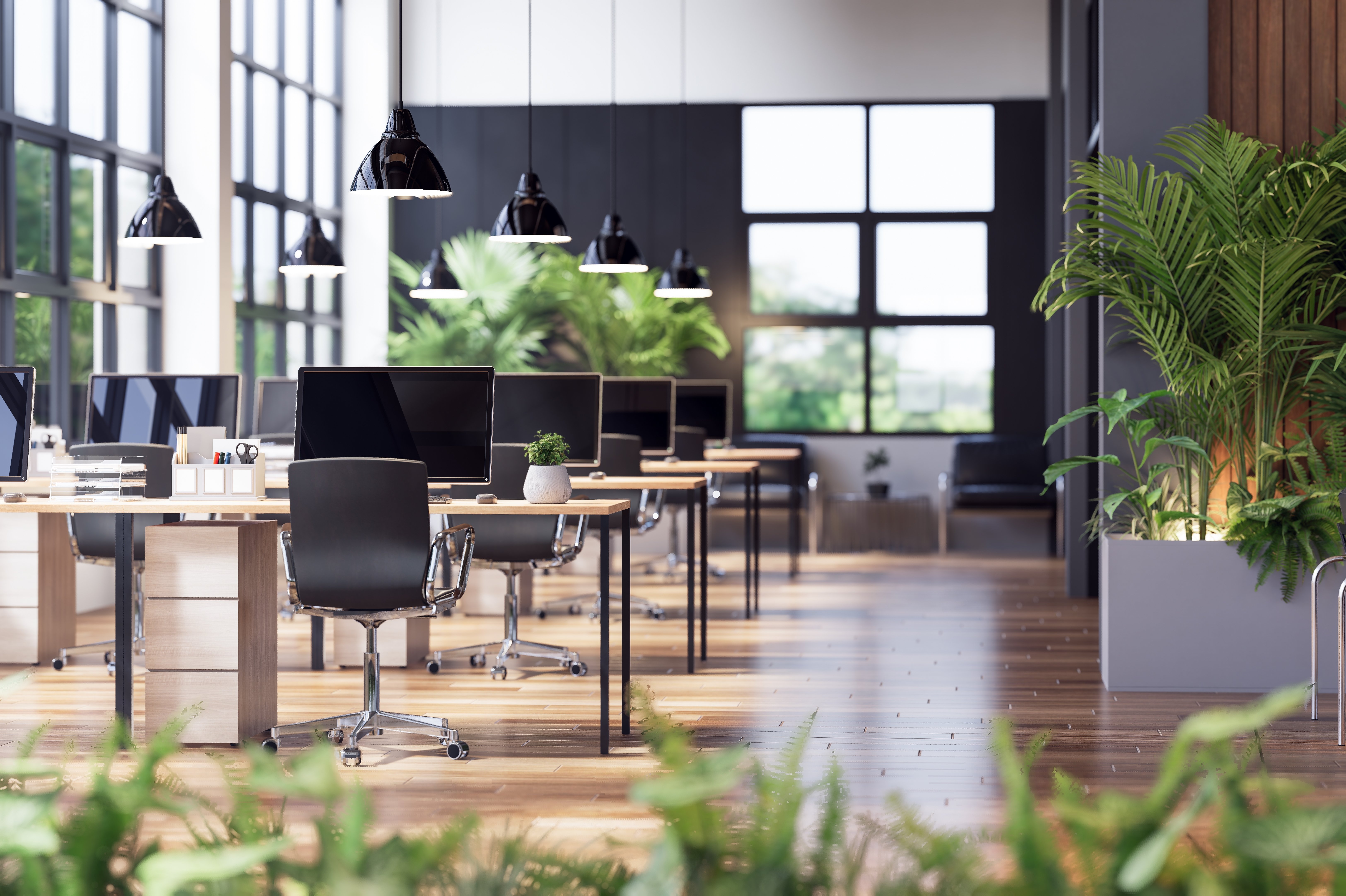
Decorating offices with plants not only enhances aesthetics but also creates a fresh and vibrant atmosphere, effectively adding green space inside the office. It reduces stress and provides a place for employees to rest their eyes, significantly reducing eye strain. Importantly, selecting air-purifying plants improves indoor air quality, making it much fresher.
6. Establish Small Meeting Corners or Zoom Rooms for Hybrid Teams
As offices transition to Hybrid work models, dedicated spaces for online meetings become essential. Creating Zoom rooms or small meeting corners for virtual meetings prevents noise from reaching other work zones and ensures meetings proceed smoothly without external disruptions. Beyond room creation, equip spaces comprehensively for seamless meetings: high-resolution cameras, quality microphones, and appropriately sized displays. Even with limited space, transparent dividers or glass walls maintain an open feel, while curtains can be installed for privacy during important meetings.
7. Choose Durable Materials and Furniture for Long-Term Budget Efficiency
Investing in high-quality, durable materials and furniture is extremely important in small office design, as it saves the budget for repairs or replacements in the long run. Select materials resistant to heavy use, easy to clean, and offering a long lifespan. The decision to invest in quality products from the start ensures the small office looks good and functions efficiently for many years.
8. Optimize Lighting and Acoustics
Appropriate lighting affects employee focus and productivity. Therefore, offices should emphasize natural lighting alongside office lights, which should be Cool White to promote alertness. Ensure even light distribution, avoiding excessively dark or bright spots, while preventing screen glare that can easily cause eye strain.
Beyond lighting, sound management is equally critical. In open-plan spaces, installing sound-absorbing panels on walls or ceilings, carpet flooring, or fabric desk dividers reduces echo and noise disruptions, enabling employees to fully concentrate on their work.
9. Use Colors and Decorative Materials to Build Brand Identity
Small office design serves not only as a space for quality creative work but also as a platform for communicating organizational image and culture. Incorporating the company’s primary and secondary Corporate Identity (CI) colors into decoration schemes builds organizational culture, creates a sense of ownership for employees, and impresses visitors.
Designing small offices to feel open, comfortable, and work-friendly isn't as challenging as it might seem. Simply prioritize comprehensive planning, emphasizing efficient utilization of every square meter such as open-plan layouts, light color palettes, and natural lighting. Beyond aesthetics, this helps keep the office organized. Many offices strive to improve their decoration to create spaces where employees feel comfortable and relaxed. When employees have positive feelings and are happy, they produce superior work, stimulating creativity, enabling concentration, and generating quality output.
Offices are therefore more than mere workplaces they must be open spaces for ideas for efficient work performance. For those seeking small offices to launch a business, JLL Thailand is ready to help you find the suitable workspace from our diverse options and sizes. Contact us for additional information at JLL Thailand or inquire further by calling 02 624 6471.
Reference:
https://doodeco.com/blog/modern-interior-design-small-office
https://www.ikea.com/th/th/ideas/home-office-ideas-pub516b0be0


