
Launching a new business or expanding operations often entails significant overhead costs, particularly workspace-related expenses. Serviced Offices, or "fully-equipped offices," have thus emerged as a compelling solution for modern businesses seeking operational flexibility and effective cost control. This article explores what serviced offices are, their advantages and limitations, and which business types benefit most from this model.
What Is a Serviced Office?
A serviced office is a fully-equipped rental workspace where the provider manages all the necessary infrastructure for immediate operation. You can simply bring your laptop and team to start working right away. Service fees typically include everything in a single monthly bill: furniture, desks, chairs, high-speed internet, utilities, and comprehensive on-site services.
Types of Serviced Offices
While the core concept emphasizes convenience, serviced offices are subdivided to accommodate different usage requirements:
1.Private Serviced Offices
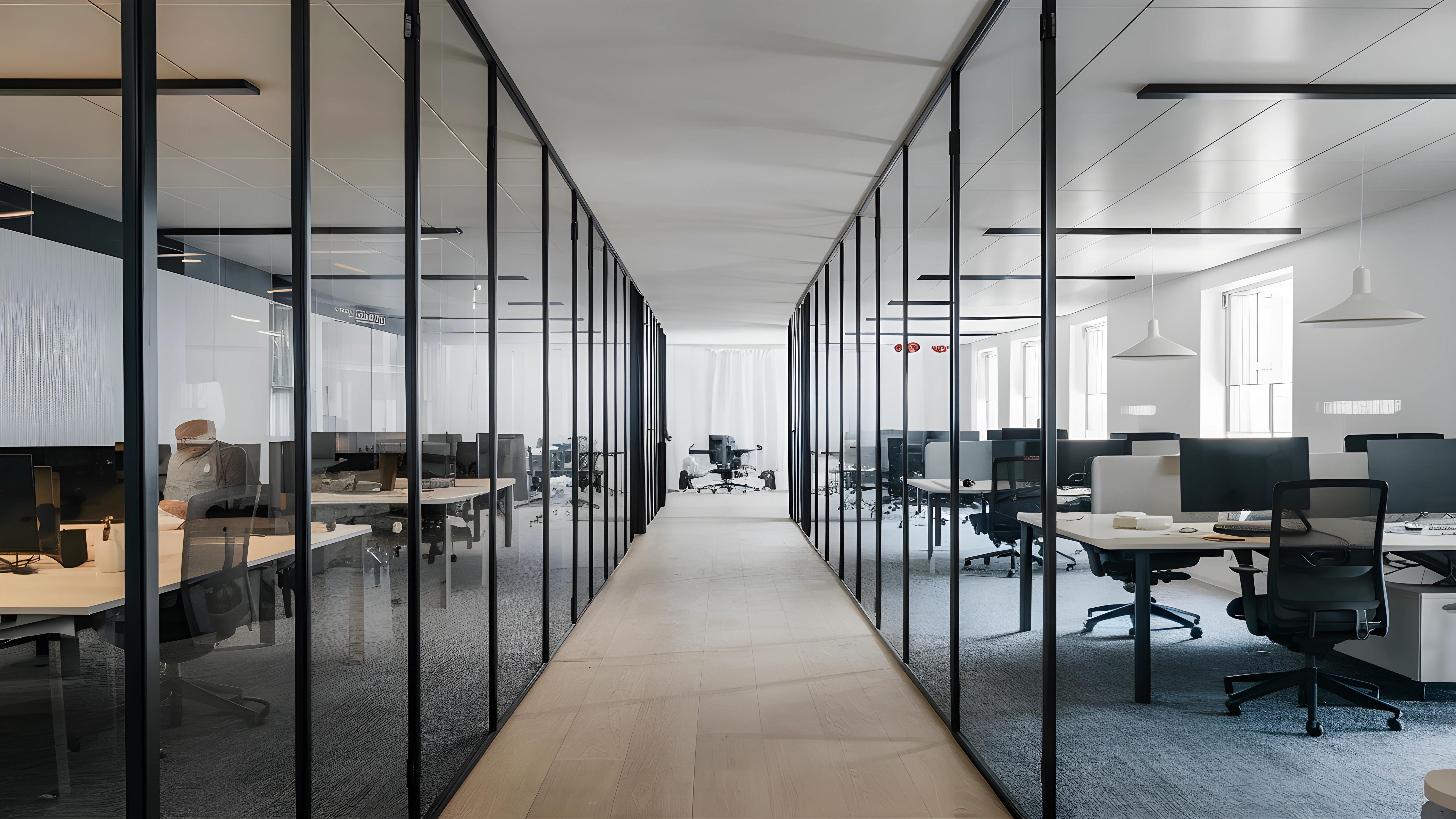
The most popular format, providing dedicated private rooms that enhance concentration and productivity. Organizations can cultivate their own corporate culture within this space while still accessing all shared facilities and services, including meeting rooms, reception, and pantries.
2.Shared Office Space

This involves renting a dedicated desk in an open-plan area. While not fully private, you receive a designated desk and chair where you can set up your computer and store personal items. This option suits freelancers or small businesses of 1-2 people requiring a permanent workspace in a prime location at a lower cost than a private office, while still enjoying full serviced office amenities.
3.Daily Coworking Space

A format without assigned desks, where you pay daily or monthly fees for access to shared areas, choosing any available seat within designated zones. This suits freelancers seeking a change of atmosphere or companies adopting hybrid work models where employees do not need to be in the office every day.
Advantages and Disadvantages of Serviced Offices
Choosing a serviced office requires weighing both the benefits and limitations to ensure it aligns with your business objectives.
Advantages
- High flexibility without long-term lease commitments.
- Low initial capital expenditure—no substantial investment in office design, only predictable monthly service fees.
- Immediate occupancy enables businesses to seize critical opportunities.
- Prime Central Business District (CBD) locations enhance company credibility.
- Comprehensive services simplify cost control by eliminating multiple utility bills.
- On-site staff provide professional corporate call handling, guest reception in your company's name, IT support, and mail management.
- Scalability—easy to expand or reduce team size.
Disadvantages
- Limited office customization—must adhere to provider regulations.
- Shared facility usage may require queuing for meeting rooms during peak times or a perceived lack of privacy in common areas.
- Less distinct organizational culture—more challenging to build than with a private, independent office.
- Maximizing space efficiency may result in a more "cramped" feel compared to conventional offices.
Who Should Use Serviced Offices?
With standout features such as flexibility, comprehensive services, and low upfront costs, serviced offices are an ideal choice for:
- New Companies
For newly established companies, minimizing risk and conserving initial capital is paramount. Serviced offices provide a credible registered address immediately without renovation costs or long-term contracts, freeing up capital for more critical operations.
- Startups
Startups scale rapidly—potentially growing from 5 to 20 employees within 6 months, or needing to downsize quickly. Flexible rentals enable them to adjust their space based on actual needs without 3-year commitments, maintaining agility for growth.
- Rapidly Expanding Companies
Medium or large companies may use serviced offices as branch locations or temporary spaces to test new markets or accommodate new employees before investing in a permanent office.
- Companies in Transition
Office relocation often involves uncertainties, such as new office renovations being delayed. Renting a serviced office as a short-term backup for 1-3 months ensures business continuity without operational disruption.
- Project-Based Teams
Companies with temporary collaborations or short-term projects benefit from immediate establishment. When projects conclude, contracts can be terminated without bearing the cost of vacant space—making it more cost-effective than conventional offices.
Traditional Office vs. Serviced Office: A Comparison
The key difference lies in flexibility and commitment. Traditional offices involve leasing bare space with long-term contracts and substantial upfront investment, requiring several months to be move-in ready. You must also independently manage utilities, cleaning, and internet.
Conversely, serviced offices offer high agility with minimal initial investment. Everything is turnkey—from desks to high-speed internet. Importantly, all-inclusive costs simplify budget management. While offering less customization, they significantly reduce risk and management burdens.
Essential Considerations Before Choosing a Serviced Office
- Inclusions: Clarify exactly what is covered by the monthly rent to ensure it suits your work style.
- Hidden Costs: Beware of additional charges for after-hours air conditioning, parking, or premium beverages.
- Environment and Community: It is advisable to use a day pass to assess the actual working atmosphere, noise levels, and organizational fit before committing.
- Operating Hours and Security: Can you access the office 24/7? What security protocols are in place?
- Termination and Expansion Terms: Review contract details regarding early exit procedures or space expansion fees.
Serviced offices represent a strategic solution for modern businesses requiring high flexibility. While monthly costs may appear higher, the initial capital savings and convenience of a turnkey solution allow you to reallocate resources to what truly matters.
For startups, SMEs, or large organizations seeking project offices, JLL Thailand can find the perfect serviced office across various locations and sizes. For more information, contact property.jll or call 02 624 6471.


